Counselling & Psychotherapy Service

Many people who are homeless will unfortunately experience traumatic events and difficulties which continue to act as barriers for progression in later life. So, the need for therapy and counselling opportunities for those with this lived experience is vital. 

Unique service offering 

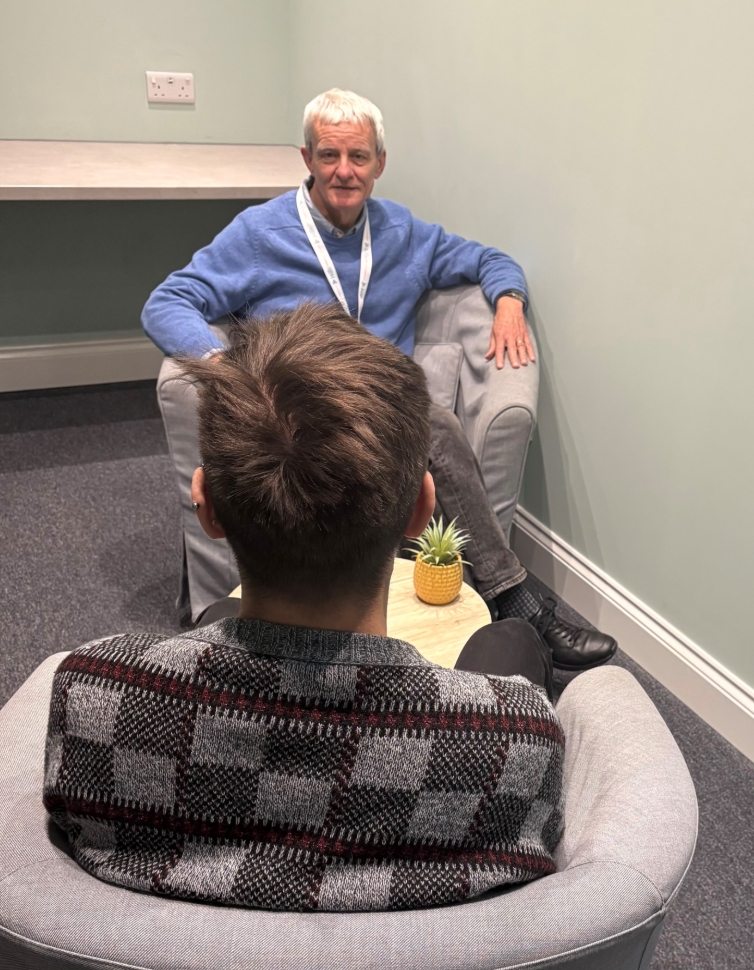
The service consists of five psychotherapists, and is led by David Crossley, a retired Medical Consultant Psychotherapist. Counsellors provide weekly sessions of 50 minutes with clients, ensuring a consistent, client-focused service. Clients work with the same counsellor throughout the time they utilise the service. To help clients feel safe and comfortable, we deliver counselling services at various locations in Glasgow, including homeless accommodations.

Our Counselling Service can offer a chance to speak to someone in confidence. Our counsellors are fully qualified and registered with professional bodies. They can offer a non -judgemental space to talk, make sense of past and present experiences, work on feelings about yourself and any relationships in your life. They also aim to help you to retain your strengths and build upon these going forwards.

Access our counselling self-referral form

Access our agency referral form


Reflections on the value of the counselling service in the Marie Trust: David Crossley, Counselling Team Leader

I worked in NHS mental health services for almost thirty years before coming to the Marie Trust. The NHS prides itself on responding to complex care needs usually by providing specialised teams to focus on a particular aspect of the complex whole – physical health teams, crisis teams, eating disorder teams, first episode psychosis teams, rehabilitation teams, and so on. 

The Marie Trust also sees complex clients but has to take a more integrated approach. For us complexity usually presents itself as a combination of significant social stress (like homelessness) often with formative experiences of a deprived, traumatised childhood plus an adult experience of addiction.  

For example, many of our clients have long-term physical conditions. Many of our clients are disabled by long-term conditions and accidents. The Office for National Statistics claim that homelessness takes 20 years off life expectancy in the UK and has been brought home to me by the premature death of two of my male clients this year.  Physical health issues are reflected in our referral routes. We have clients referred to us from specialist charities like Waverly Care (who work with people with blood-borne viruses). Waverley Care provides a lot of psychosocial support – group work for example – but needs help with some highly traumatized clients. I think here of clients who have witnessed murders or had long prison sentences and who self-harm but also have to deal with HIV.  We try to develop a coherent narrative with them about how fragments of their life and the choices behind them have fitted together thus far - but could yet be put on a different course. 

Being co-located with other Marie Trust staff has helped provide better-integrated response for counselling clients facing acute social stress.  For example, a man with a long-standing opiate addiction in his 40s lost his long-term partner whilst he was in hospital undergoing treatment for life-changing injuries following an accident. As a consequence, he loses rights to the tenancy. He’s homeless and never previously lived independently. When rehoused he gets into rent arrears – so a Marie Trust intervention worker spends an hour and a half on the phone to help. It's not that he lacks the cognitive ability to solve these problems, but he has always depended on other people or other substances having been caught up in Glasgow’s gang culture in his youth. His life is beginning at 40. 

Many of our clients have long-term serious mental illness which only comes to light when they are homeless. I can think of clients who have had a long history of mistrust with family and friends, but this mistrust is driven by an underlying psychosis and the experience of persecutory voices. Clients like this might be plugged into NHS specialist services (and we have been involved in strengthening those links) but those services do not necessarily have the time resource to provide weekly psychotherapeutic support to explore the meanings embedded in the client’s experience of mistrust or history of trauma once other symptoms are stabilised. On embarking on this exploration, she finds she has more agency and control over the voices than she had expected. 

How does a client know they are making progress? Sometimes it's quite a small outward sign. A client lets me know they can’t make an appointment rather than just not turning up. This tells me they are holding me in mind as a reliable other. Sometimes progress is an insightful link – a lifetime of hoarding of stuff that led to the breakdown of a tenancy and homelessness really has something to do with attempts to compensate for childhood deprivation and insecurity. Sometimes progress is stepping onto the education ladder for the first time and learning how to photograph – to look out onto the world rather than feel the world is looking at you as an object of shame.

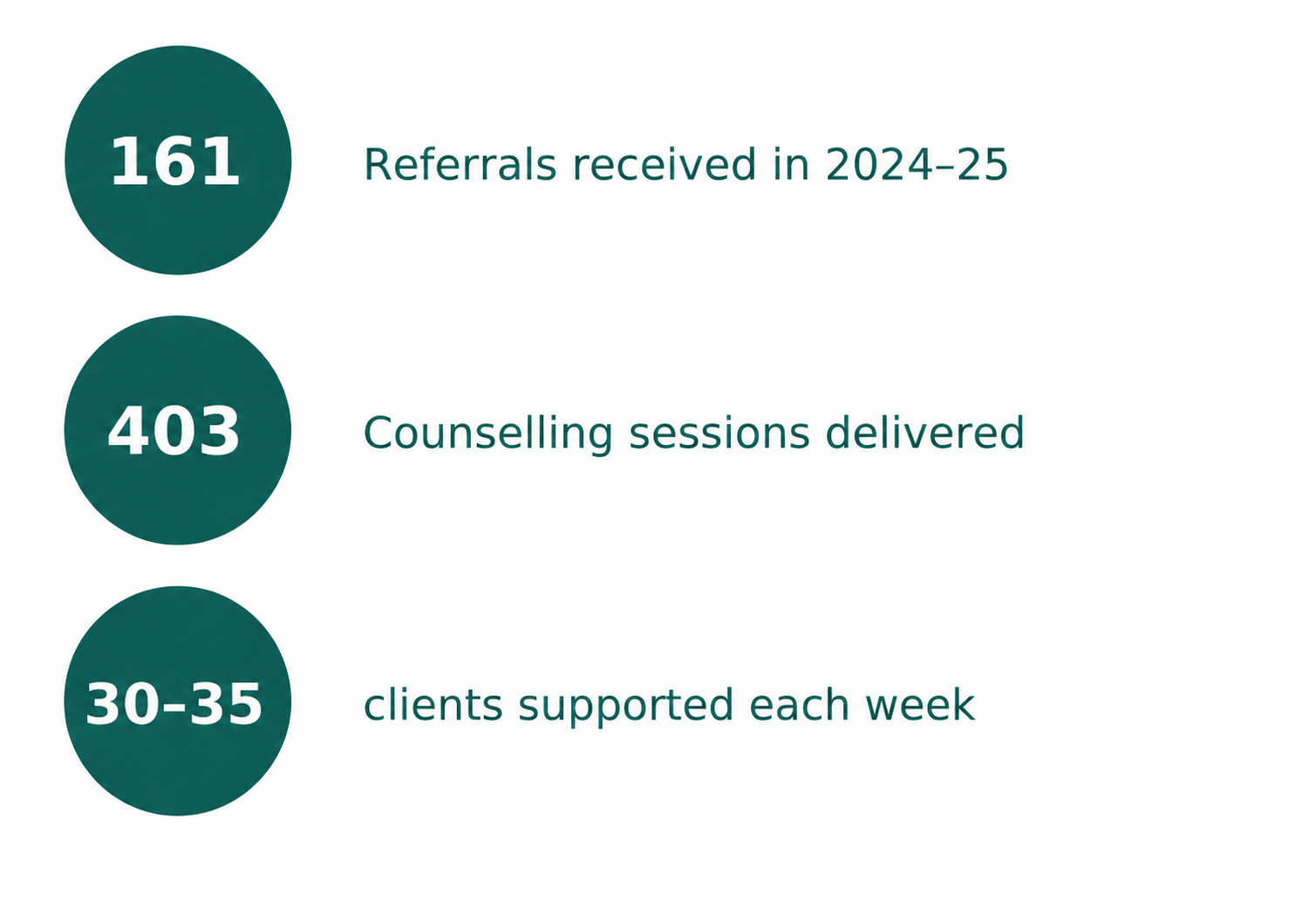
Total number of counselling sessions offered in 2023/24: 235

​Percentage of counselling sessions attended in 2023/24: 65%

“Being able to have the time to work through extremely difficult traumas has helped me more than words can express. 

The privacy and anonymity of the service allowed me to feel safe in accessing it.  Without the help I received from the counsellor I would not be where I am today. I am in stable long-term housing, in education at university, and have developed healthy, loving friendships.

I have completely exited prostitution, have been able to stop misusing drugs and alcohol and have an overall good sense of well-being.” 

Counselling Client, Marie Trust